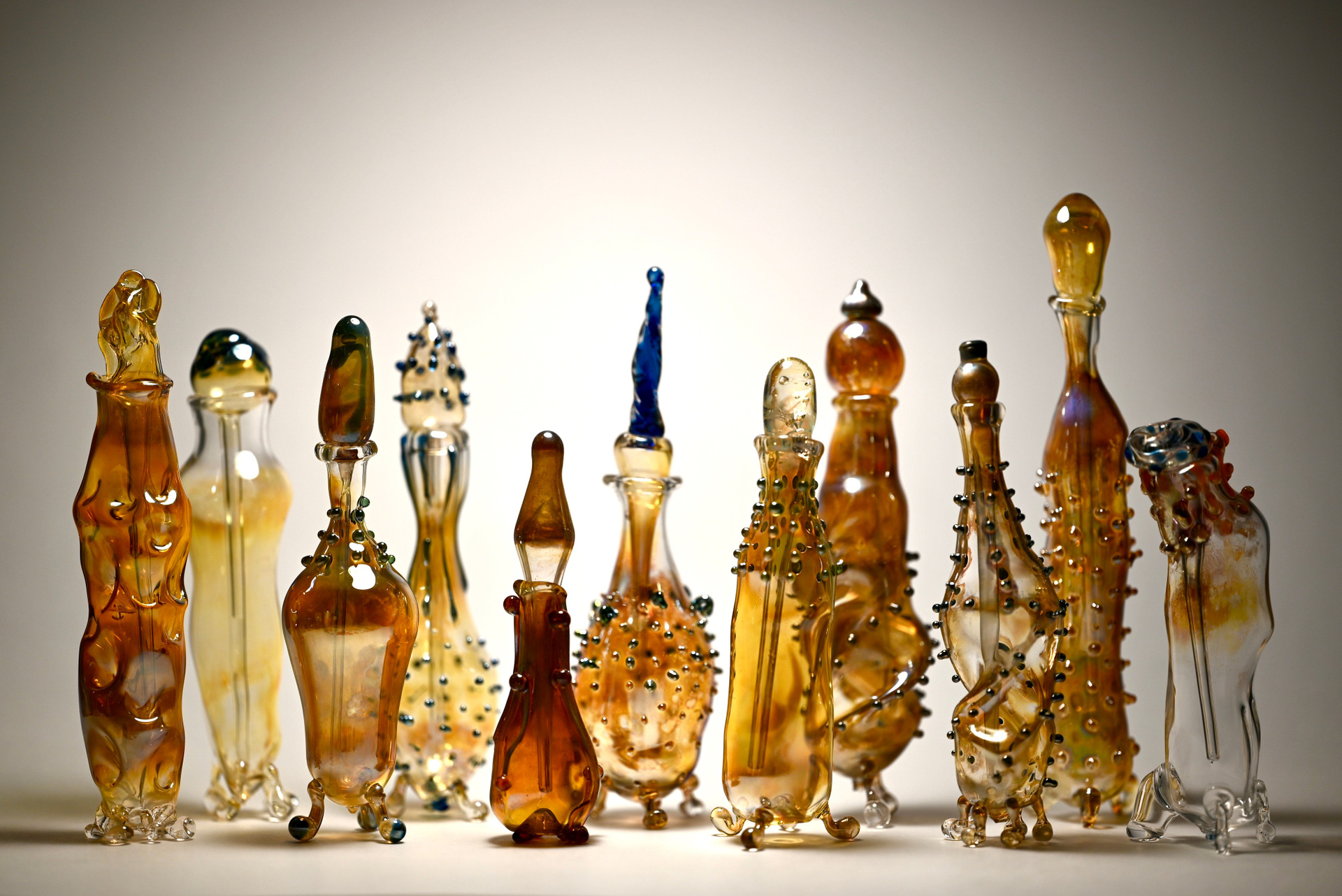
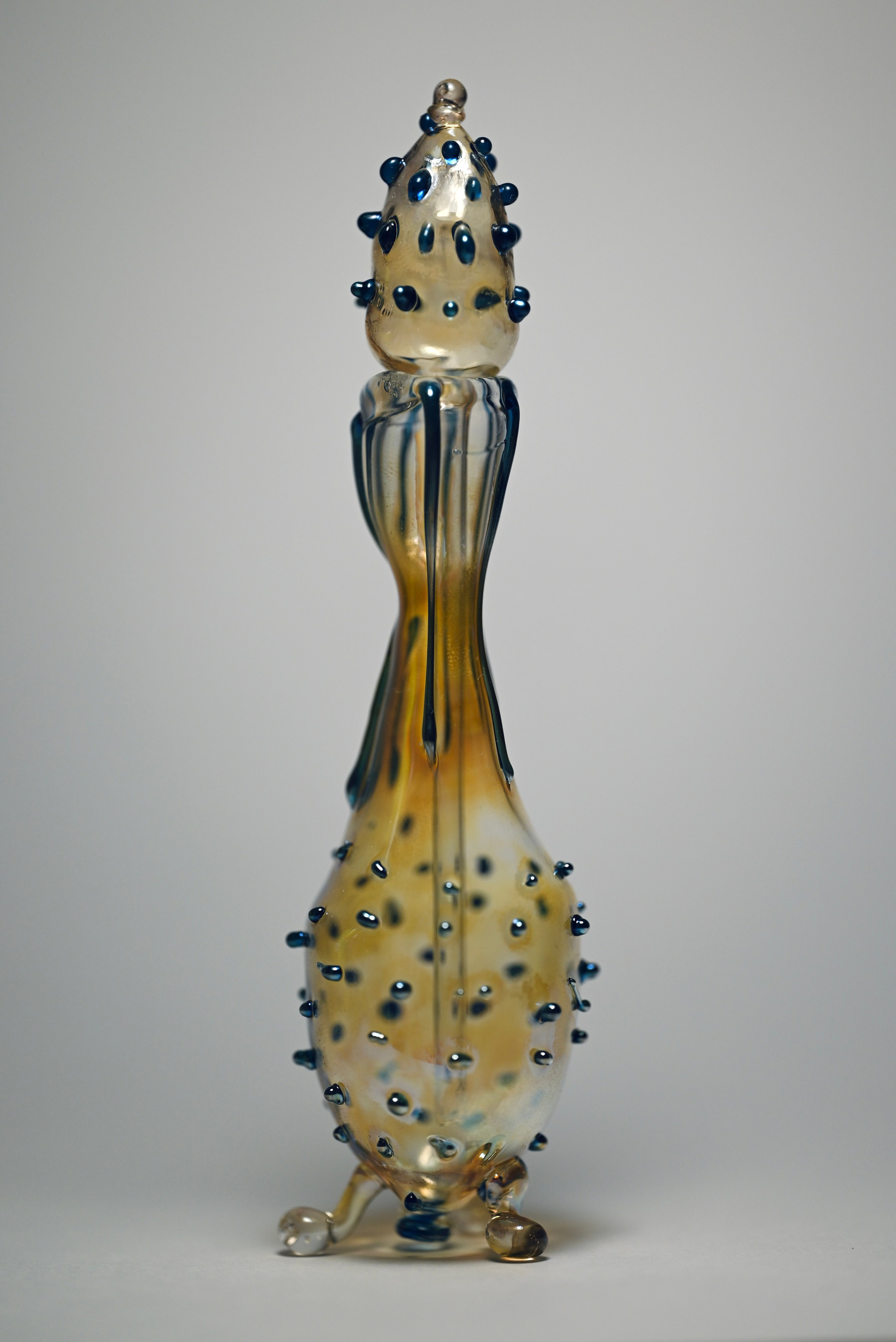
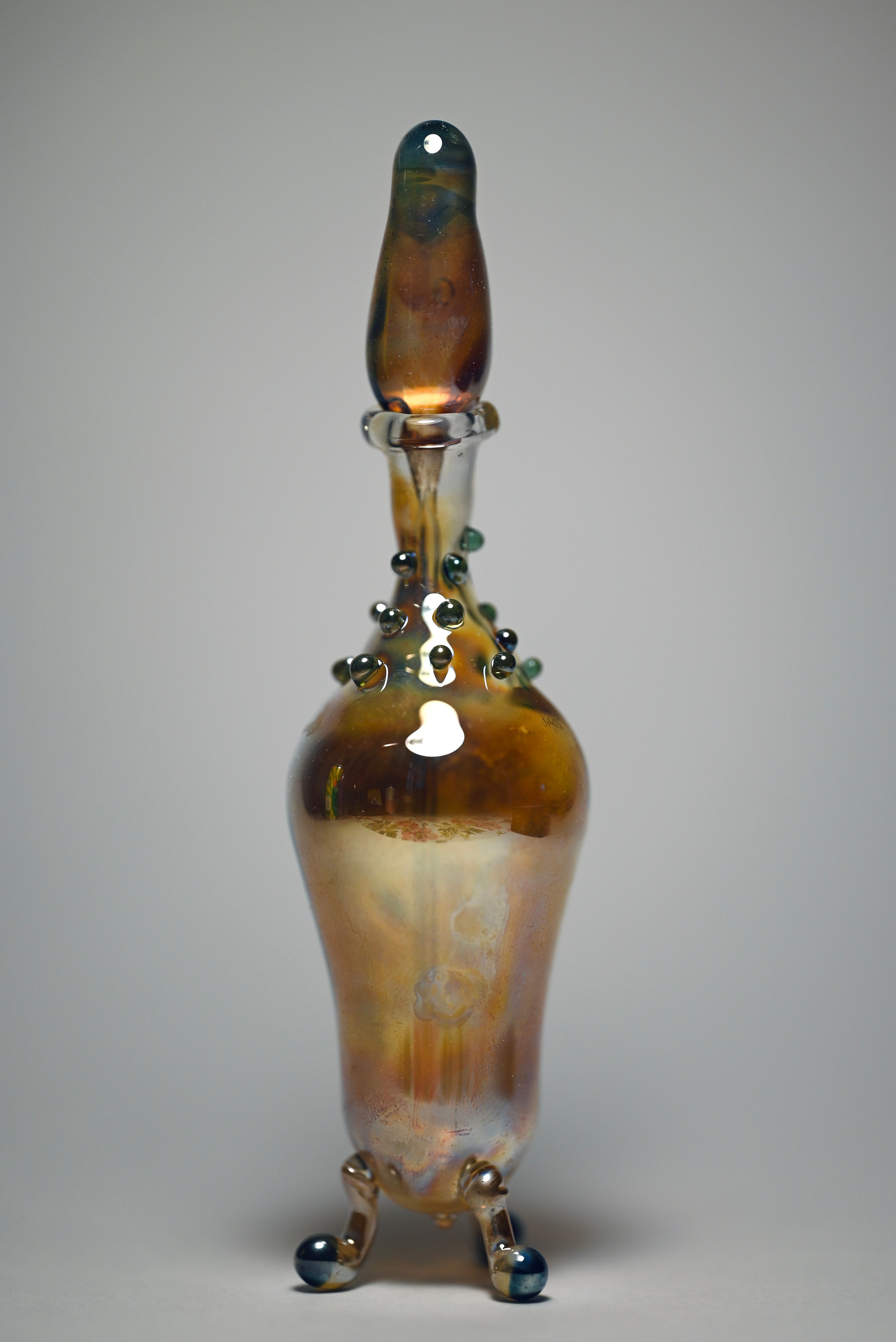
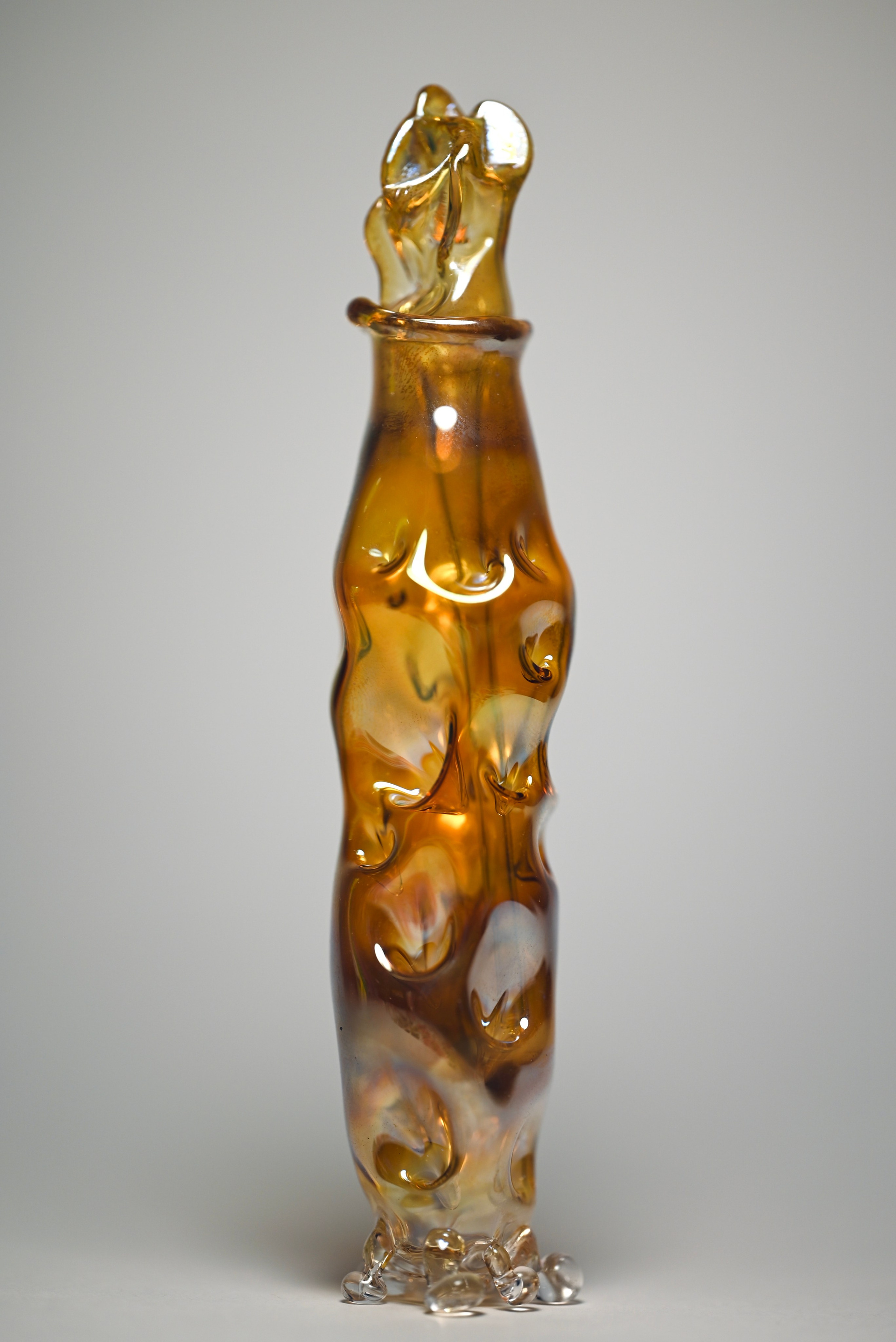
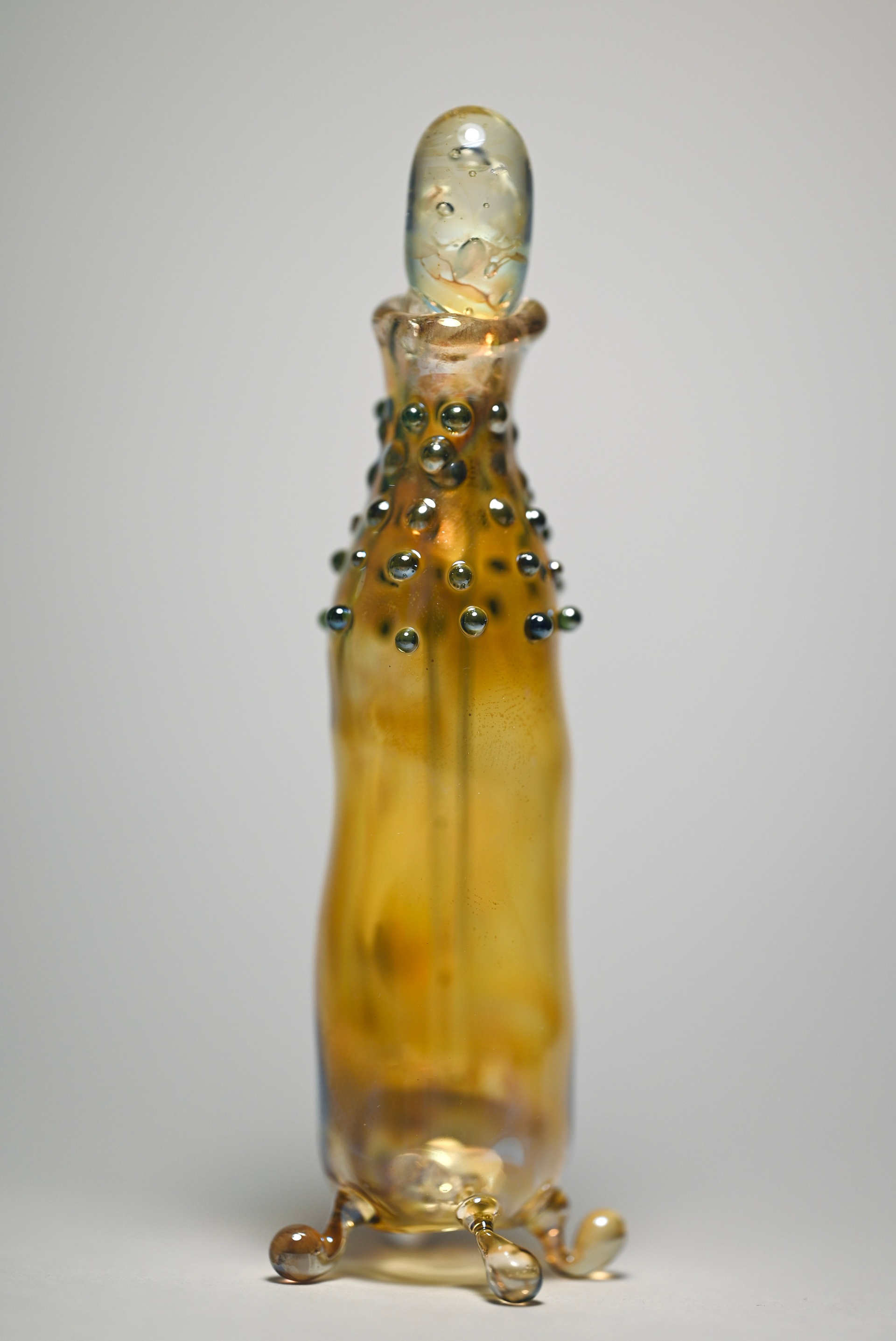
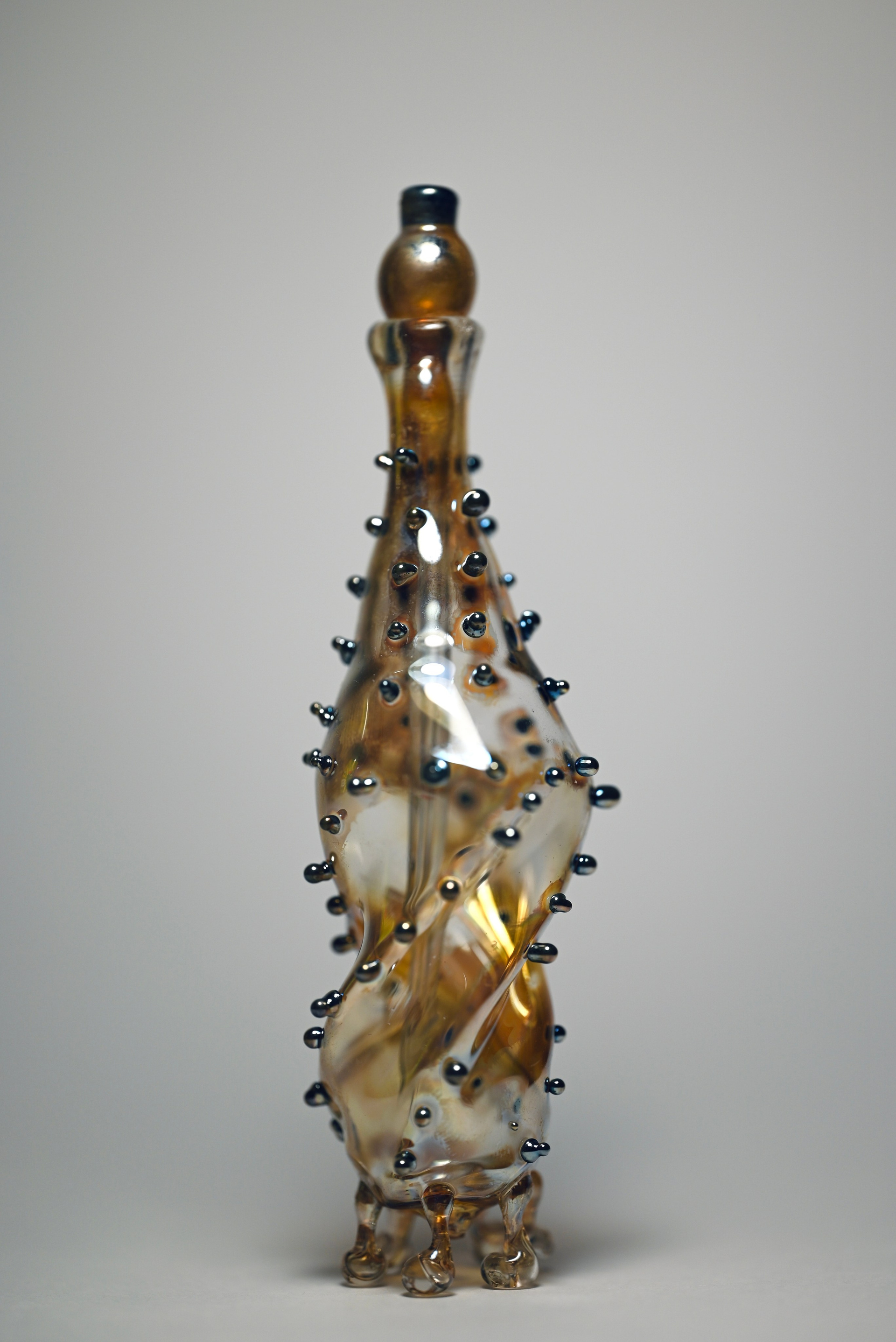
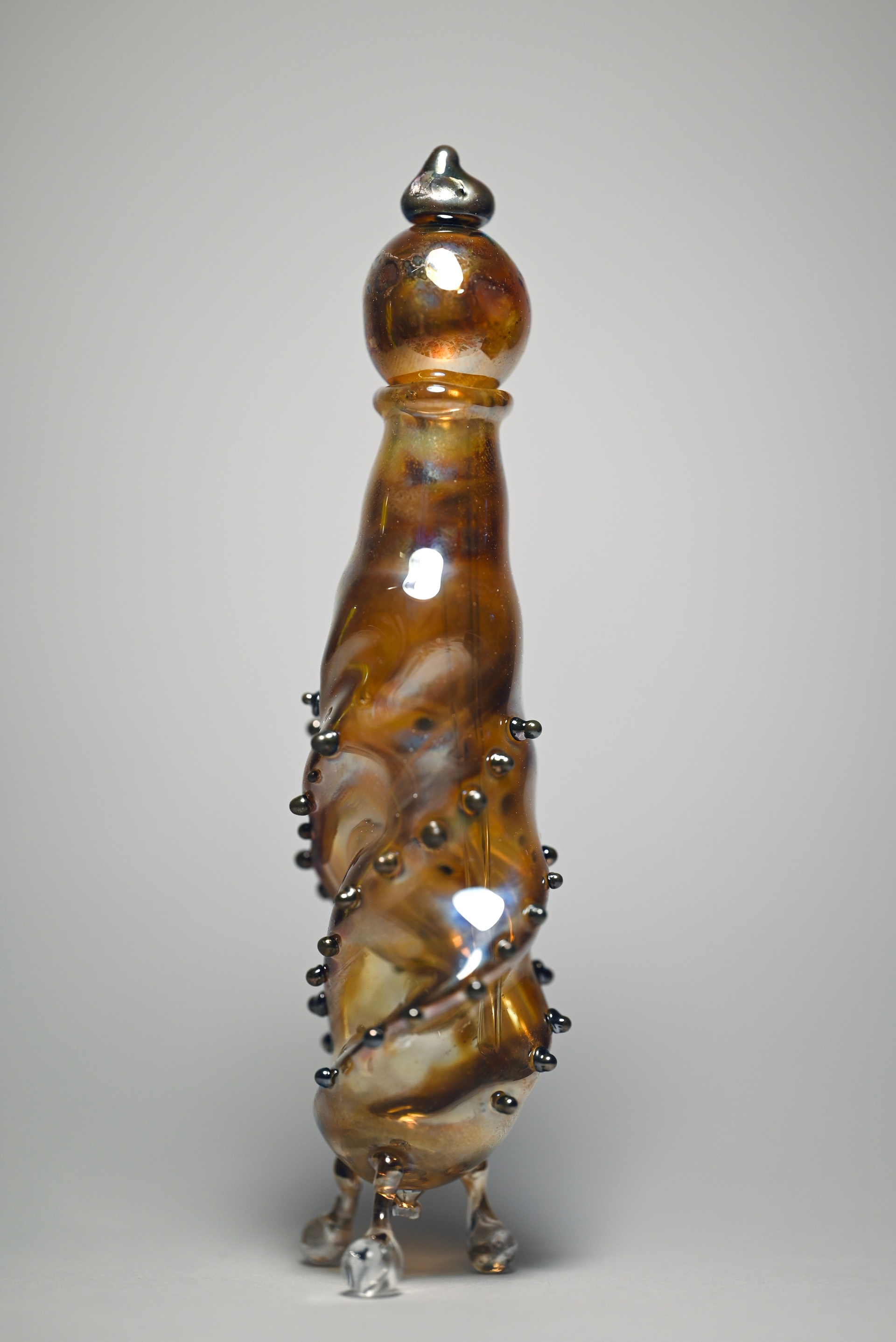
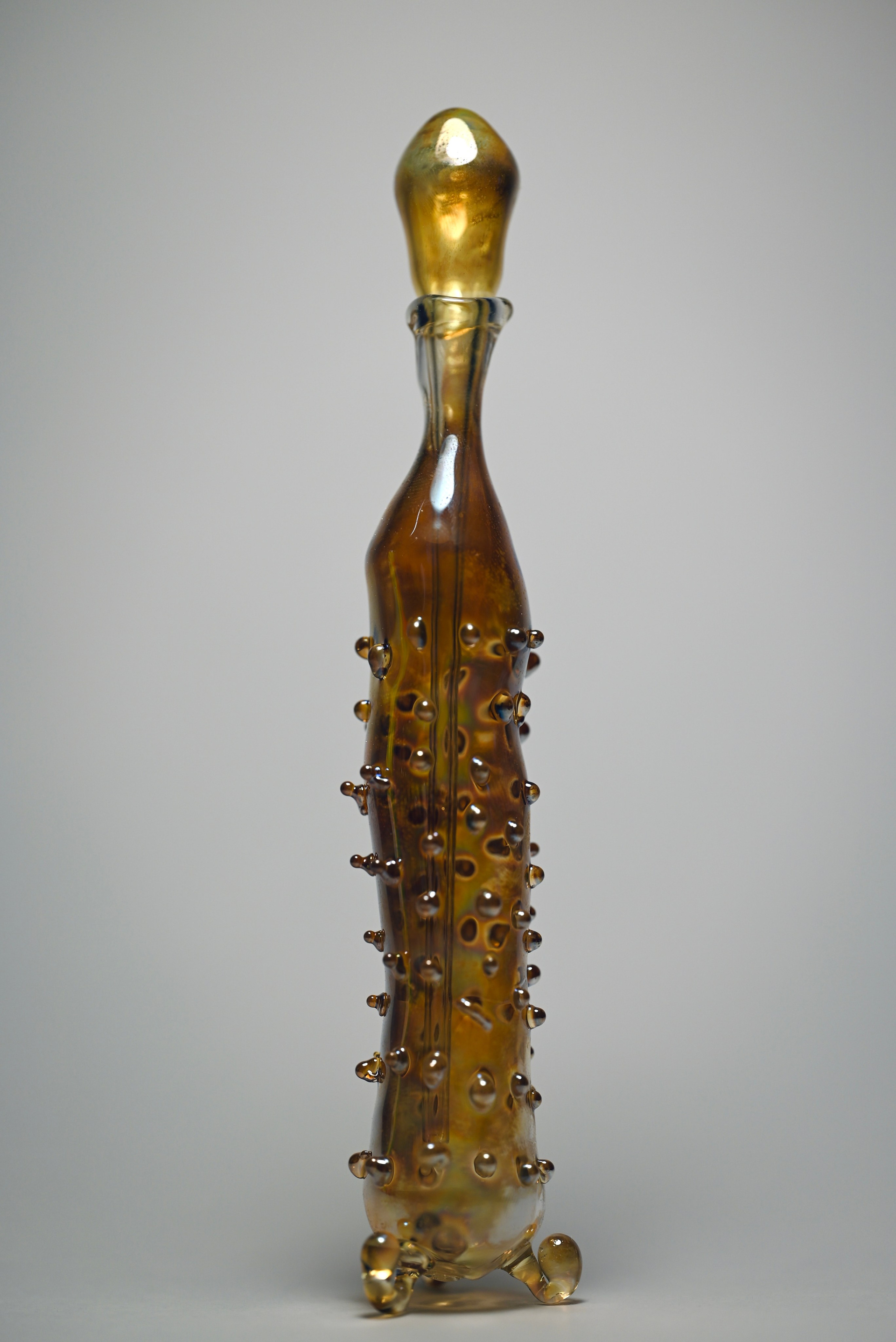
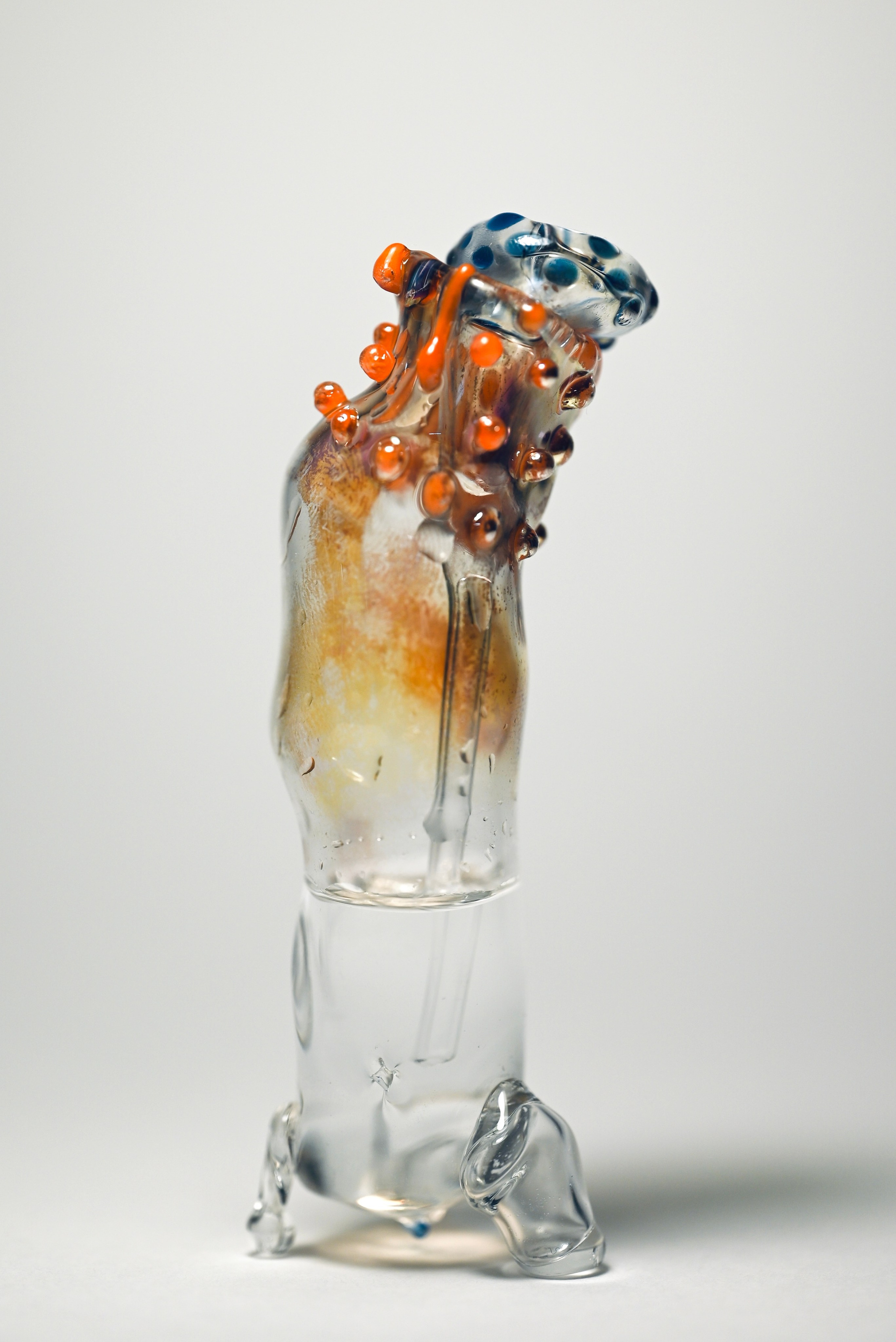
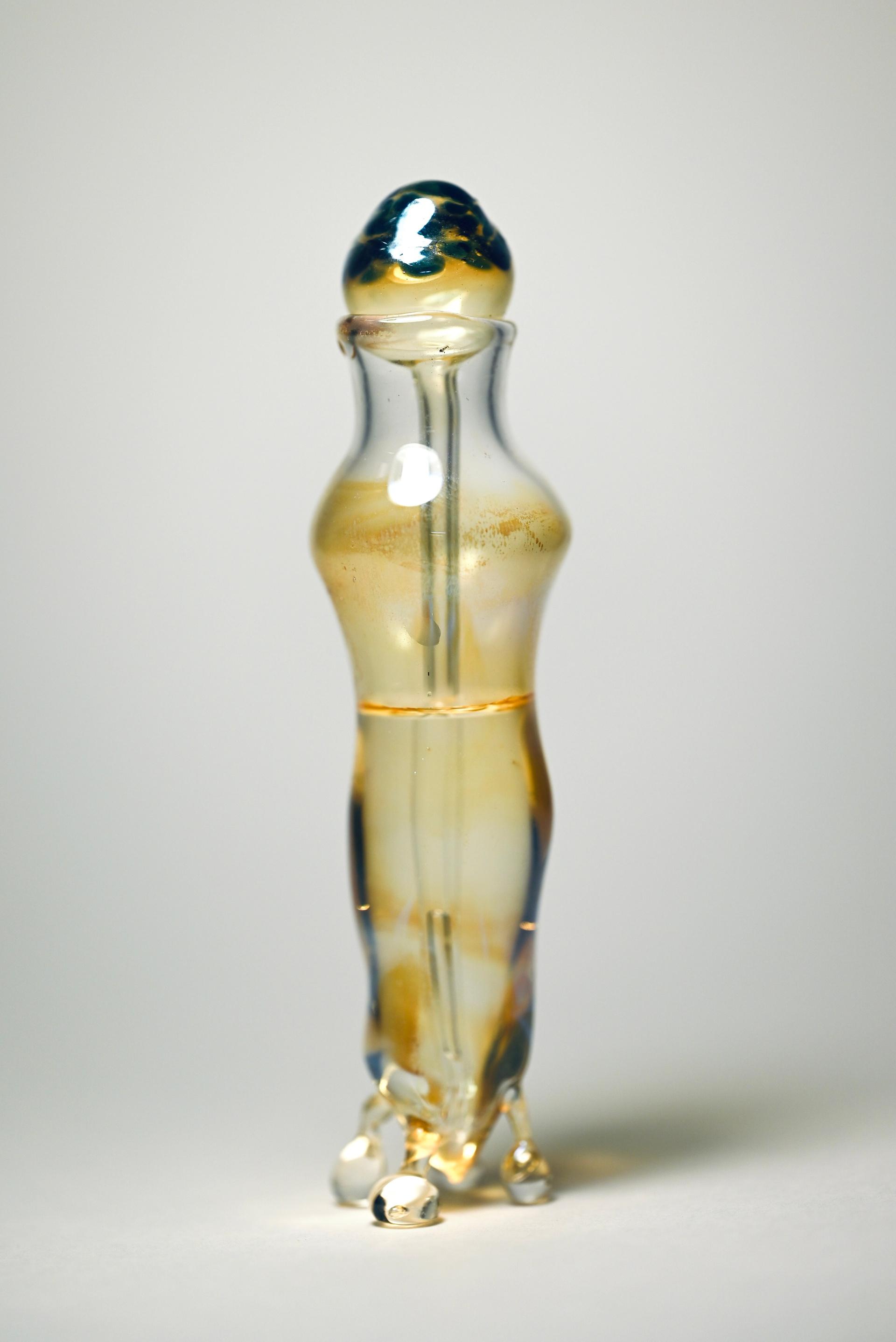
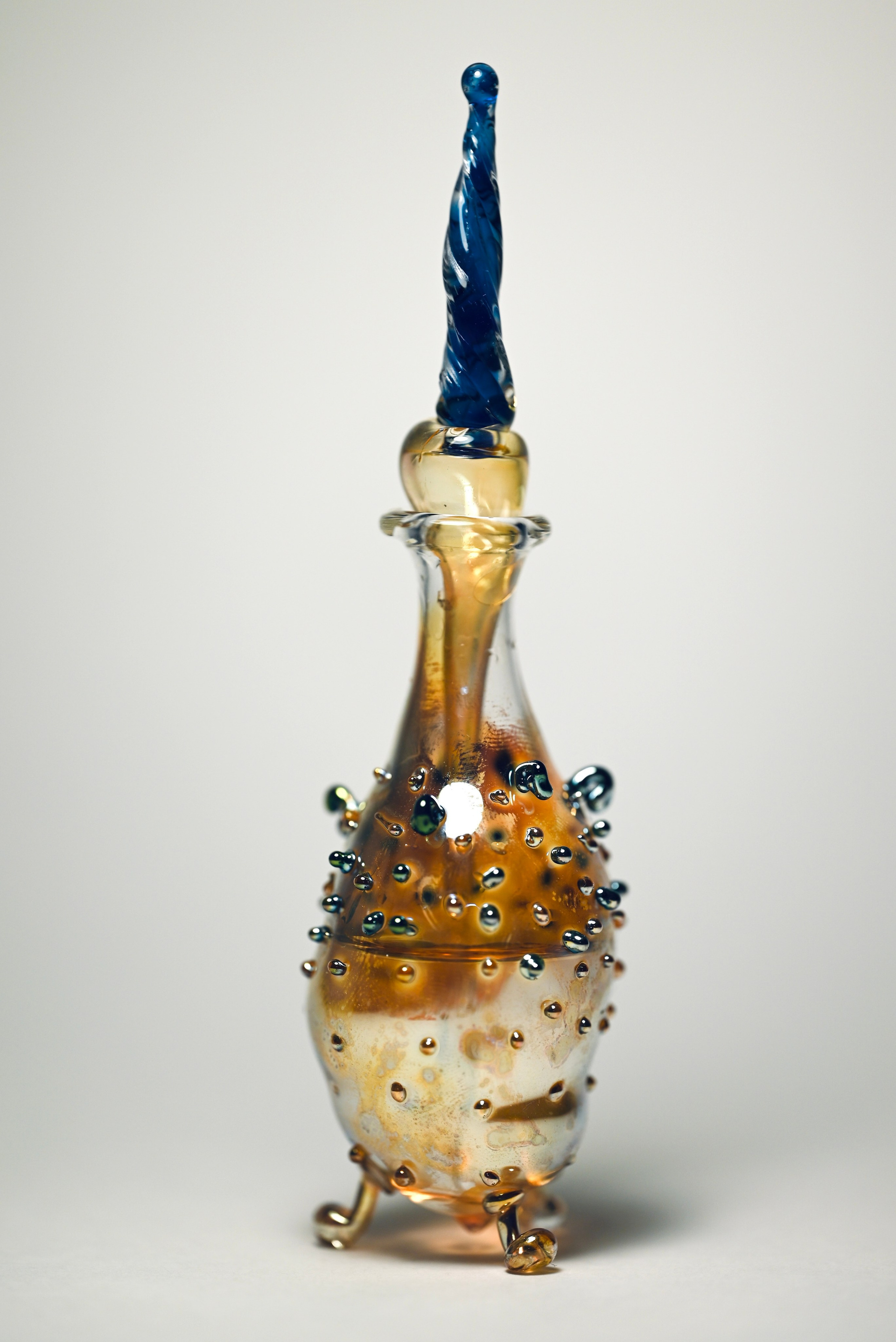
The “Zagorsk” Vessel SeriesAs if extracted from altars long forgotten and drowned in twilight, these glass vessels are not merely objects but remnants of memory, recovered in amber flesh. They carry the echo of a rite in which darkness and gold, myrrh and dust merge into a soundless liturgy. Their bodies are elongated, distorted, as though prayed out of fire. They are imperfect, like architecture sinking into the earth. Their necks are voices frozen in a posture of prayerful extension.The growths, bubbles, and thorns are tears, arrested breaths, unwept requiems settled upon the skin of glass.Within each form lies a reflection of Zagorsk—hidden, chthonic. Not the fairground city, but the ancient one, with darkened frescoes, icons that have lost their faces, with night incense spilled across blind bell towers. It is a place where darkness and light do not battle but blend into one, like in old enamel.These vessels are not meant for wine or oil. They are containers: for ash, for penitential whisper, for silence that stretches across centuries. They crawl and bow as if burdened by knowledge that must not be spoken. In them lives the memory of a pre-linguistic, pre-iconic world, where glass is not yet glass but the thick tear of the earth.The collection is inspired by ecclesiastical implements, phials, small ritual containers, and the visual memory of lost sanctuaries. These are glass bodies that have forgotten their functions yet preserved their sacred tension. They are mute relics whose forms resemble ritual shards—not from a museum, but from a dream that remembers a church after people have gone.These are not decorative objects. They are the chthonic poetry of glass—frozen breaths of light, dust, and darkness.